
The Telecom Regulatory Authority of India on Thursday launched a channel selector application which will facilitate consumers to view their TV subscription and choose the channels of their interest while removing the unwanted ones.

With already around 500 television channels on air, the ministry is now concerned about streamlining the process of allowing the opening of new channels.

The broadcasters will offer the same bouquets to the DTH operators as are being offered by them for non-CAS cable distribution. In addition, they are free to offer additional bouquets, Trai said in a statement. This is in consonance with the TDSAT's judgement dated in March, 2007, it said, adding all bouquet rates and the a-la-carte rates must satisfy the provisions of the aforesaid interconnection regulations.
Mobile television allows the consumers to watch live as well as pre-recorded television content on a mobile handset using a specialised mobile television broadcasting technology. Currently, only video clips can be downloaded on mobile handsets.
Broadcast regulator Telecom Regulatory Authority of India has struck down Nimbus' appeal to price its two sports channels at a premium to market rates, including in conditional access system areas.
The Telecom Regulatory Authority of India is recommending the cancellation of sports broadcaster ESPN STAR Sports' downlinking licence for non-compliance with the DTH platform's pricing formula.TRAI's proposed action follows its direction and a show cause notice to ESPN Software India in the last two months asking it to fall in line with its DTH pricing formula.
All cable operators will have to regulate the charging and billing procedure to follow the new telecommunication (broadcasting and cable) services (second) tariff (eighth amendment) order, 2007, from December 1, issued in a notification recently by the Telecom Regulatory Authority of India. According to the new regulations, every cable operator of a multi-system operator or a broadcaster will have to give to every subscriber the bill for the charges due.
Broadcast regulator TRAI is likely to fix the maximum retail price for television channels under the Conditional Access System regime, which will require a nine-month transition period as per the consensus, the government said on Monday.
A meeting to resolve these differences has been called on April 5 by the Telecom Regulatory Authority of India.
The regulator may ask broadcasters to abide by the tribunal's pricing formula.

The move by these broadcasters comes close on the heels of the Telecom Regulatory Authority of India announcing a review of its earlier tariff order, announced six months ago, which among others capped the prices for la carte channels.
Telecom Regulatory Authority of India is working on a consultation paper on digitalisation of television broadcasting in the country, which is expected tobe submitted to the government next month.

Cable television charges across the country will go up by 4 per cent from January 1, 2006 with broadcast regulator TRAI allowing operators and broadcasters to hike prices on account of inflation.
A division bench of Justices Amjad Sayyed and Anuja Prabhudessai passed the judgment on a bunch of petitions filed by several broadcasters, like the Indian Broadcasting Foundation, a representative body of TV broadcasters, the Film and Television Producers Guild of India, Zee Entertainment Ltd and Sony Pictures Network India.
The Telecom Regulatory Authority of India on Wednesday endorsed the Ministry of Information and Broadcasting proposal to reduce the license fee on Direct to Home (DTH) service providers. Trai said it had received a communication from the ministry conveying its decision to continue with the concept of gross revenue for the purpose of License fee on DTH service providers and to reduce the license fee. Trai's opinion also was sought on reduction of licence fee from 10% to 6%.
The Delhi high court on Friday asked the Centre to clarify by next Tuesday the timeframe within which it would take a decision on Telecom Regulatory Authority of India's recommendation that private FM Radio broadcasters be shifted from licence fee re
Mobile TV -- basically an application that enables television services on handhelds such as mobiles, handheld TVs, car TV, GPS terminals, game devices, laptop PCs, and other portable devices -- is a step closer to seeing the light of day in India.
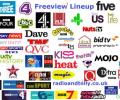
Information and Broadcasting Ministry says no cap will be placed on the number of private satellite channels
Telephone Regulatory Authority of India's decision not to give permission to political outfits to launch satellite channel has come as a dampener for many parties, which were planning to enter the television arena ahead of the next year's general elections. Several state governments, including Delhi, Tamil Nadu and West Bengal, and political parties had approached the Ministry of Information and Broadcasting seeking permission to start their own television channels.
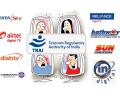
All distribution platforms can move their subscribers to the new framework by February 1.
The Telecom Regulatory Authority of India on Thursday specified a ceiling for charges to be paid by subscribers to cable operators, by the operators to multi system operators and by MSOs to broadcasters for both, pay and free-to-air channels.
In a reversal of its recommendations made in April 2008, the Telecom Regulatory Authority of India whittled the increase it had suggested then in the foreign direct investment cap for companies set up to uplink television news channels, as well as in FM radio.

For years it has been evident that fibre and DTH would give tough competition to cable in India where regulatory overload has mutilated an already warped industry structure. OTT added fuel to the fire. From Rs 27,000 crore in 2010, cable's share of subscription revenues is now estimated at Rs 13,000 crore.
These numbers have been submitted to the regulator, the Telecom Regulatory Authority of India, by various stakeholders in the cable industry, including broadcasters and multi-system operators. These are based on the information collected from the tax departments of various state governments.
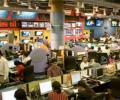
NDTV operates news channels, including NDTV 24X7 and NDTV India.
Nripendra Misra's three-year stint as chairman of the Telecom Regulatory Authority of India (Trai) will be remembered for a host of recommendations and a number of controversies. Controversial issues like the conditional access system, non-CAS pricing kept Misra, who retires as Trai chairman on March 22, 2009, in the news.
Last week's Supreme Court decision on cable-pricing means that 83 million cable homes will end up paying more for their television.
After the quality of service regulations for cable operators in CAS-notified areas, Telecom Regulatory Authority of India has recommended a slew of service obligations for Direct-To-Home operators.
Mobile TV essentially uses DVB-H (Digital Video Broadcast to Hand-held devices) technology for broadcasting content on mobile handsets, or any DVB-H enabled devices such as palmtops, gaming devices or laptops. However, other technology options for Mobile TV are also available such as 3G, MediaFLO, T-DMB, and S-DMB.
The new broadcasting regulator Trai on Wednesday said it will strive to end the monopoly of cable operators by creating an atmosphere for entry of more players while regulating industry tariffs in the interim.

The regulator has asked the DTH operator to file a status report over implementation of the new tariff regime
Trai and telecom companies are divided in their views on the issue of raising the foreign direct investment (FDI) limit in various media-related activities like cable television, direct-to-home, etc. Trai has proposed across-the-board increase in the FDI limit across cable (49 per cent), DTH (49 per cent), HITS (no existing limit) and satellite radio (no existing limit) to 74 per cent, as allowed in the telecom sector. Companies like Bharti Airtel are supporting this proposal
The Telecom Regulatory Authority of India has recommended that the government ensure and expedite availability of more Ku band transponders (which can be used for TV as well as data transmission) so that DTH companies can also offer broadband services.
The Delhi high court on Wednesday asked the Centre, Trai and Star India Pvt Ltd to respond to a petition challenging the January 9 government notification bringing broadcast and cable services under Trai's jurisdiction.
 © 2026 Rediff.com - Advertise with us - Disclaimer - Privacy Policy - Sitemap - Feedback - About us - Terms of use - Grievances